ADDRESSABLE SYSTEM
ADDRESSABLE SYSTEM
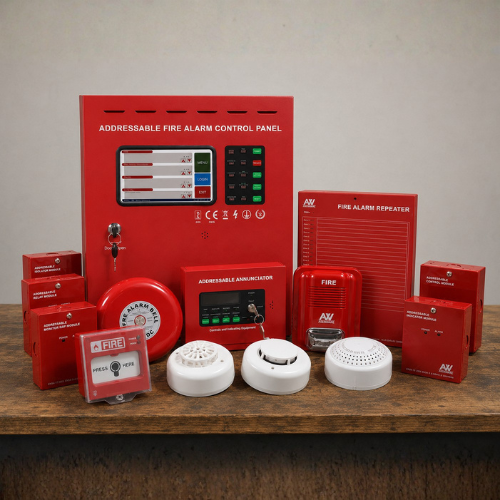
An addressable fire suppression system is an advanced fire detection and suppression system in which every field device—such as smoke detectors, heat detectors, manual call points, and input/output modules—has a unique electronic address. This allows the fire alarm control panel to identify the exact device that has activated, providing precise information about the fire’s location and enabling faster emergency response.
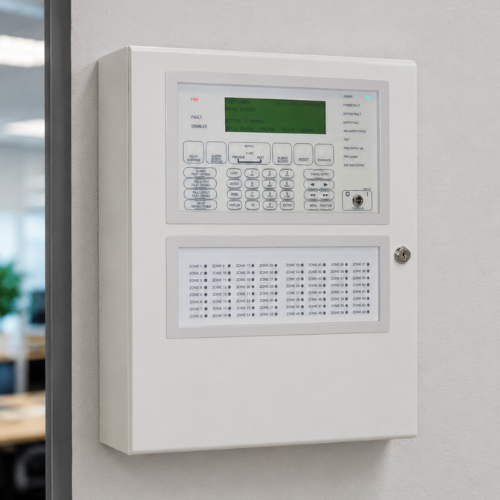
An addressable suppression system continuously monitors each connected device on a communication loop. When a detector senses smoke or heat, the control panel displays the exact device address and location (for example, “Server Room – Smoke Detector 3”). The system can then initiate a programmed sequence that includes activating alarms, shutting down HVAC systems, closing dampers, releasing the suppression agent after a preset delay, and notifying building management or emergency services. Addressable systems are commonly integrated with clean agent, CO₂, foam, water mist, sprinkler, or other specialized suppression systems, depending on the hazard being protected.
Main Components:
- Addressable fire alarm control panel
- Addressable smoke, heat, and flame detectors
- Addressable manual call points
- Addressable input/output and monitor modules
- Audible and visual notification devices
- Suppression agent storage cylinders or water supply
- Release control modules and actuators
- Distribution piping and discharge nozzles
- Manual release and abort switches
- Communication loops and network interfaces
- Remote monitoring or building management system interfaces (optional)
Operations:
1. An addressable detector senses smoke, heat, or flame.
2. The control panel identifies the exact device and its location.
3. Audible and visual alarms are activated, and the fire condition is displayed.
4. The system may perform programmed actions such as:
– Shutting down HVAC systems
– Closing fire dampers and doors
– Disconnecting electrical equipment
5. A pre-discharge countdown allows occupants to evacuate or activate an abort switch (if provided).
6. The suppression agent is automatically released into the protected area.
7. The system records all events and remains in alarm until it is inspected, reset, and restored to service.
Applications:
Addressable suppression systems are widely used in:
- Data centers and server rooms
- Telecommunications facilities
- Hospitals and healthcare facilities
- Airports
- Museums and archives
- Industrial plants
- Power generation facilities
- High-rise commercial buildings
- Laboratories and research facilities
Advantages:
- Pinpoints the exact detector or device in alarm.
- Faster fault diagnosis and maintenance.
- Supports large and complex installations.
- Allows extensive system programming and automation.
- Provides detailed event logging and diagnostics.
- Easier expansion and integration with other building systems.
- Reduces response time by identifying the precise fire location.
Limitations:
- Higher initial installation cost.
- Requires more specialized design, programming, and commissioning.
- Maintenance and troubleshooting may require trained personnel.
- Replacement components are often manufacturer-specific.