GAS SUPPRESSION SYSTEM

GAS SUPPRESSION SYSTEM
A gas suppression system is a specialized fire protection system that extinguishes fires by releasing a gaseous extinguishing agent into a protected enclosure. It is designed to suppress fires quickly while minimizing damage to sensitive equipment and leaving little or no residue after discharge. Gas suppression systems are commonly used in areas where water-based systems could damage valuable assets or disrupt critical operations.
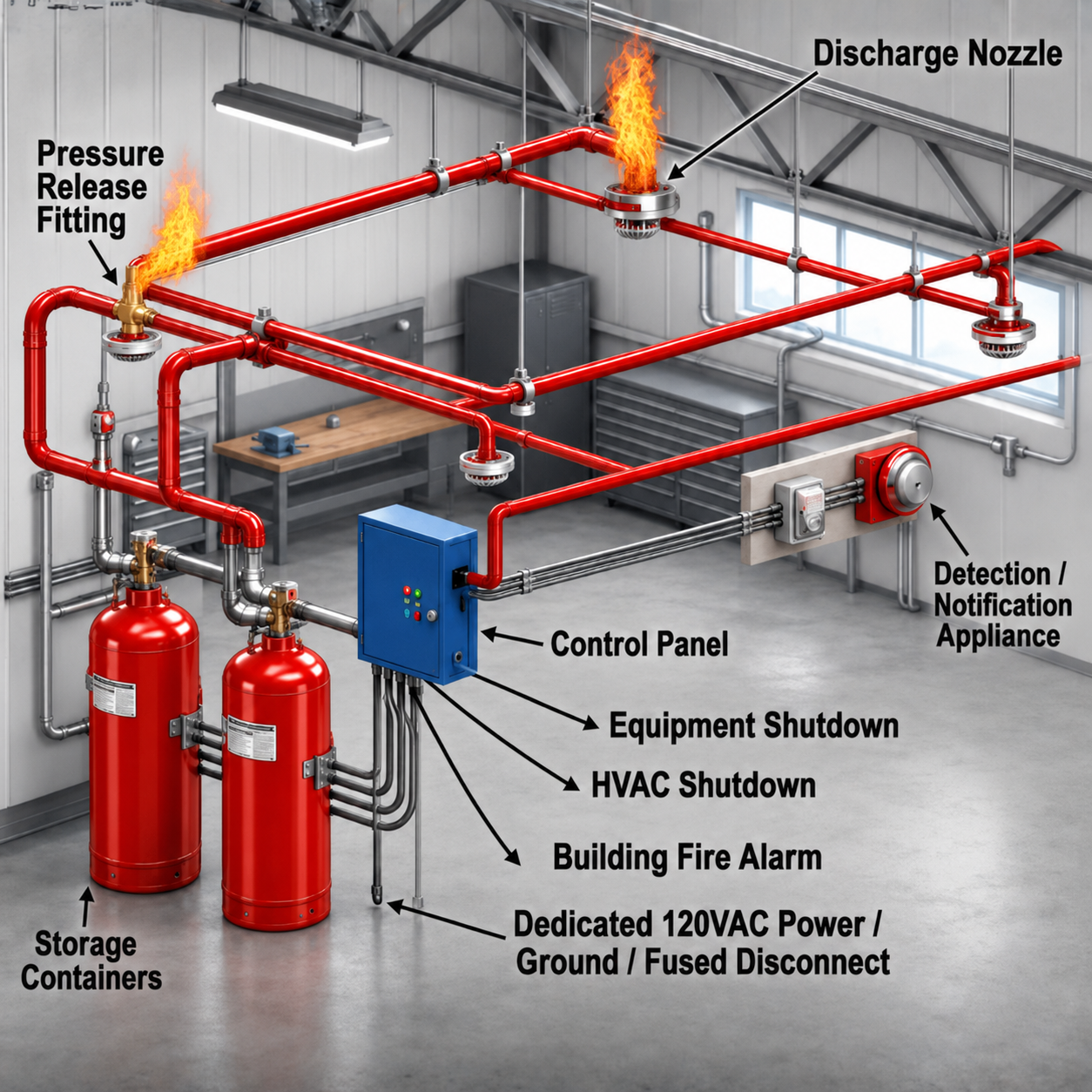
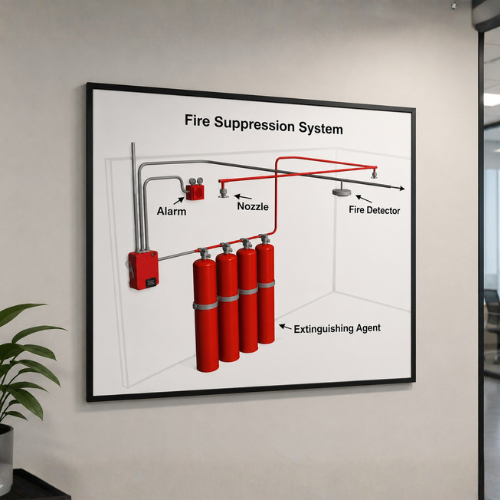
A gas suppression system detects the early signs of a fire using smoke, heat, or flame detectors. Once the fire is confirmed, the control panel initiates a pre-programmed sequence that includes activating alarms, providing a pre-discharge warning, and automatically releasing the gaseous extinguishing agent. The gas is distributed through a network of pipes and discharge nozzles, filling the protected space to a concentration sufficient to extinguish the fire.
Depending on the type of gas used, the fire is suppressed by:
– Reducing the oxygen concentration to a level that prevents combustion (while remaining safe for short-term human exposure where applicable).
– Absorbing heat from the fire
– Interrupting the chemical chain reaction that sustains combustion
Common Suppression Agents:
Clean agents
- FM-200 (HFC-227ea)
- Novec 1230 (FK-5-1-12)
- Inergen (IG-541)
- Argonite (IG-55)
Main Components:
- Fire alarm and suppression control panel
- Smoke, heat, or flame detectors
- Manual call points
- Audible and visual warning devices
- Gas storage cylinders
- Cylinder valves and actuators
- Distrubution piping
- Discharge nozzle
- Pressure relief vents (where required)
- Manual release station
- Abort switch
- Door and damper control interfaces
Operation:
1. Fire detectors identity smoke, heat, or flame.
2. The control panel verifies the alarm condition (often requiring two independent detector signals in critical applications).
3. Audible and visual pre-discharge alarms warn occupants.
4. Ventilation systems are shut down, and damper and doors are closed to contain the gas.
5. After a preset delay, the gas is released into the protected enclosure.
6. The gas suppresses the fire within seconds.
7. The protected area remains sealed for a specified holding time to prevent re-ignition.
8. The system is inspected, cylinders are recharged or replaced if discharged, and the system is reset.